
The renewal quote is what starts most of these conversations. Somebody at a bank or an ISP in Nairobi opens a VMware number three or four times last year's, looks at the rack, sees the same servers that were there in January, and asks what else is possible.
OpenStack removes the license line completely. No per-socket fee, no per-core bundle, no renewal that reprices because the vendor changed owner. What it does not do is remove the cost, and any private cloud cost comparison that stops at "the software is free" is selling you something. The money moves rather than disappears. We design and run OpenStack private clouds for service providers, banks and universities across Kenya and East Africa, so this is where it lands instead.
What a VMware renewal is really pricing
Broadcom licenses per core with a sixteen core minimum per CPU, which is the part that catches Kenyan estates with older or smaller processors. An eight-core CPU still licenses as sixteen. Two of them in a host and you are paying for thirty-two cores to run twenty-four.
Broadcom also stopped publishing list prices, so every figure in circulation is either a third-party benchmark or somebody's leaked quote. Licensing advisors who benchmark these deals put VMware Cloud Foundation list somewhere around USD 350 to 400 per core per year, with negotiated enterprise rates on a three-year commit closer to USD 100 to 130. vSphere Foundation sits lower, in the USD 135 range at list. Treat all of those as bands rather than prices, and get your own quote before you plan around any of them.
There was also a scare in April 2025 when Broadcom raised the minimum order to seventy-two cores per subscription, which would have priced small estates out entirely. That one was reversed after the backlash. The sixteen-core-per-CPU minimum stayed, and perpetual licenses are still gone for good. Red Hat OpenStack customers have their own version of this conversation arriving, because 17.1 is the last classic director release and the successor moves the control plane onto OpenShift.
Where the private cloud cost goes when the software is free
Three places, and only one of them is optional.
Hardware is the first, and the surprise is the control plane. A production OpenStack cloud wants three controllers before your first instance boots, and those three servers will never run a workload of yours. That is not overhead you can argue away: MariaDB Galera needs a majority to accept writes, so two controllers are genuinely worse than one, because you double the failure surface and gain nothing. At four nodes we sometimes virtualize the control plane to keep the entry cost sane and we say plainly what that trades away.
The network is the second, and it is the one that gets left out of proposals. A private cloud wants three of them: management, tenant overlay and storage. Each needs its own switch ports and its own thinking, and retrofitting the layout on a running cloud means rebuilding it. If the switching is already tight, that line can beat the server line.

Engineering is the third and the largest. OpenStack expects an operator. Not a heroic one, but somebody who owns upgrades, watches certificate expiry and queue growth, and knows what to do when the API stops answering at nine on a Friday night. If nobody is going to be that person, a managed contract is not an upsell, it is the design.
A vendor subscription is the optional one. Canonical folds OpenStack support into Ubuntu Pro at a published USD 500 per physical server per year, or USD 1,775 with 24/7 infrastructure cover, on the Ubuntu Pro price list. Red Hat and Mirantis quote per node and publish nothing. Because we build on upstream OpenStack, you can take a subscription in year two or never.
Run it against a small real estate, three hosts with dual 32-core CPUs, so 192 licensable cores:
| Line | VMware VCF | Upstream OpenStack |
|---|---|---|
| Software, per year | USD 19,200 to 76,800 depending entirely on your negotiation | 0 |
| Optional vendor support | in the subscription | USD 1,500/yr (Ubuntu Pro, 3 servers) or nothing |
| Control plane hardware | runs on the same three hosts | 3 more servers, or virtualized at this size |
| Who operates it | a vSphere admin | an OpenStack operator, in-house or contracted |
The spread on that first row is the honest answer to "what does VMware cost". It is a negotiation, not a price list, and the gap between the two ends of it is bigger than the entire OpenStack hardware delta.
The Kenya part nobody prices correctly
No hyperscaler region is live in this country yet. AWS announced a Nairobi region with three availability zones in September 2025, targeting late 2026. Oracle announced one in January 2026 at iXAfrica's campus, in build. The Microsoft and G42 geothermal project at Olkaria stalled in May 2026 over guaranteed capacity payments and grid capacity, and its original target is gone. Announced is not operational, and procurement decks in Nairobi have been treating those three as though they were interchangeable with a live region.
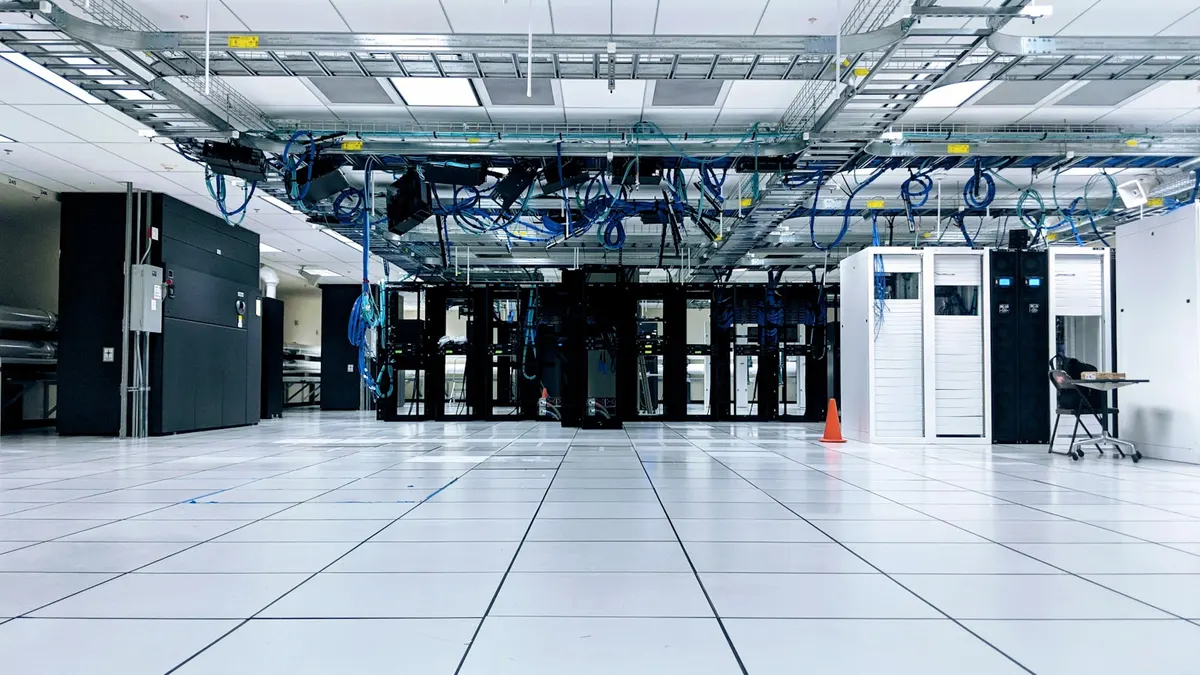
So a workload that has to stay in Kenya today runs on hardware in a Nairobi facility. That is not a preference, and for some institutions it is not even a choice. Regulation 28 of the Computer Misuse and Cybercrime (Critical Information Infrastructure and Cybercrime Management) Regulations 2024 requires that infrastructure on which critical information is domiciled be located in Kenya, with an application to the Committee if you want it elsewhere. Banking and savings services sit inside the gazetted CII sectors. Whether a specific institution's systems are designated is a question of fact to confirm with NC4 and your regulator rather than something a vendor should assert across a table, but if you are designated, the private cloud stopped being a cost decision.
Latency is the softer argument and it is usually oversold. From a Nairobi connection we measure Cape Town at about 85 ms and Johannesburg at about 81 ms on a TCP handshake. Frankfurt is around 190 ms. For a batch job none of that matters. For a chatty core banking application with a hundred round trips per screen, it is the whole user experience. Measure from the branch, not from head office, and be suspicious of any latency table showing a hyperscaler region in the teens from Nairobi, because that is an anycast edge answering, not the region.
When we tell people not to do this
If you run twelve VMs and one team touches all of them, you do not want OpenStack. You want Proxmox VE, and you will be running production in a fortnight instead of a quarter.
OpenStack earns its complexity when other people need to help themselves: projects with quotas, tenants who must not see each other, an API that a developer or a paying customer drives without asking you. If nobody outside your team ever needs to launch an instance, the whole control plane is cost with no return, and that one question settles the choice more reliably than any feature table.
The other honest no is the operator question. A cloud nobody upgrades is a cloud that quietly becomes unsupportable. Epoxy 2025.1 goes unmaintained around October 2026 and Gazpacho 2026.1 is the current skip-level upgrade target, on the published OpenStack release schedule. Clouds three or more releases behind are a genuine rescue job, and we do that work, but it costs far more than the upgrade you skipped.
The four numbers that decide the quote
Bring the four numbers that decide everything and we can price it properly: your licensable core count today, whether anyone outside the platform team needs self-service, whether any of your systems are designated critical information infrastructure, and who is going to own the cloud in year three. That last one changes the shape of the answer more than the first three combined.
Send those and we will come back with one scoped figure, or with the reason you should renew for another year and revisit it. Scope a private cloud through the form, or send it on WhatsApp to +254 713 403 044. The quote is free and commits you to nothing.